
Specialist Mathematics tuition, built around exam-question precision
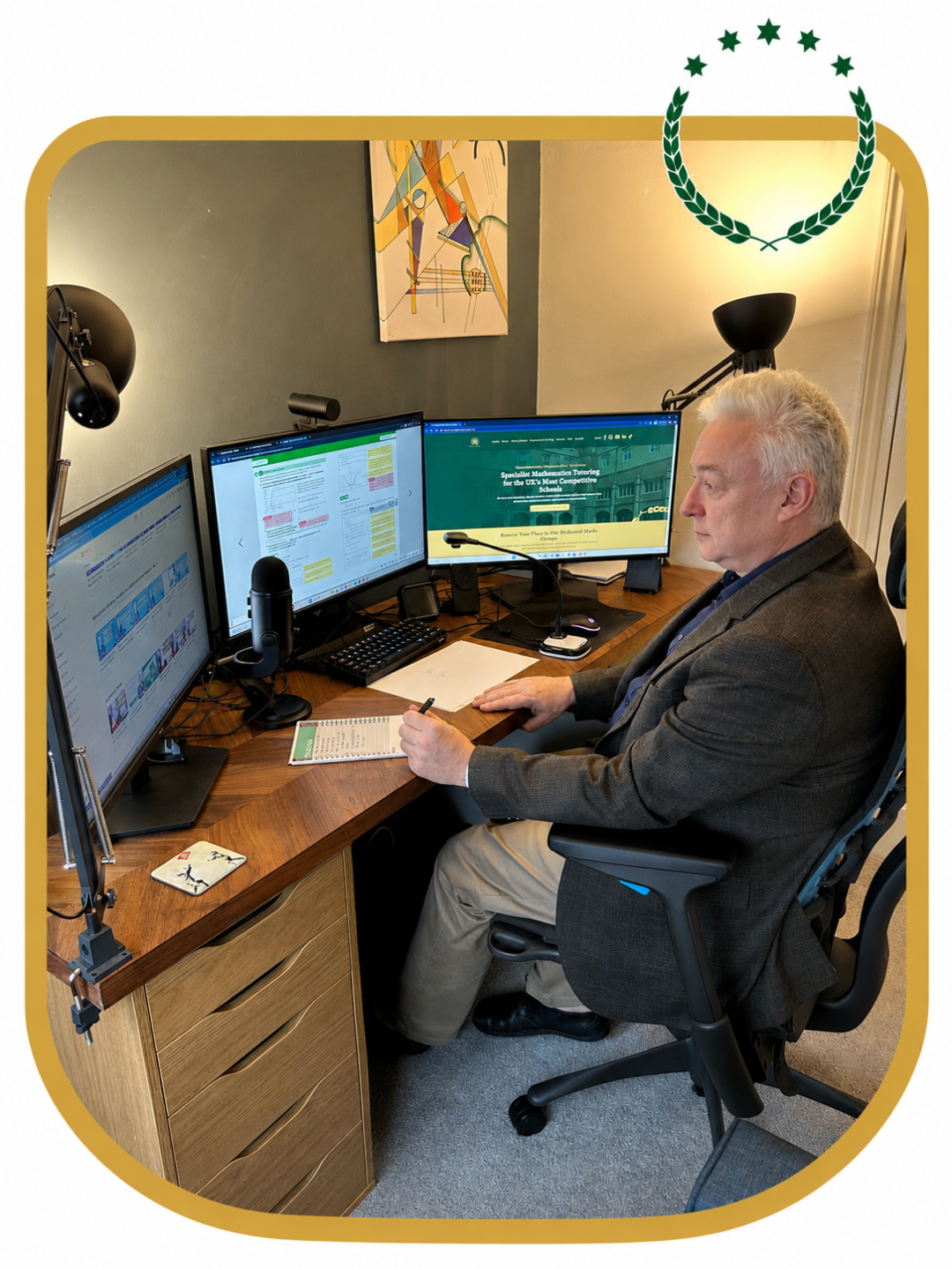
I'm Lee Guffick. After fifteen years teaching maths in the classroom — most recently as Head of Mathematics — I now run a small-group programme for ambitious GCSE and A-Level students alongside ongoing work as an Edexcel A-Level examiner. This page covers more about my background, my approach to teaching, and what families can expect.
Register your interest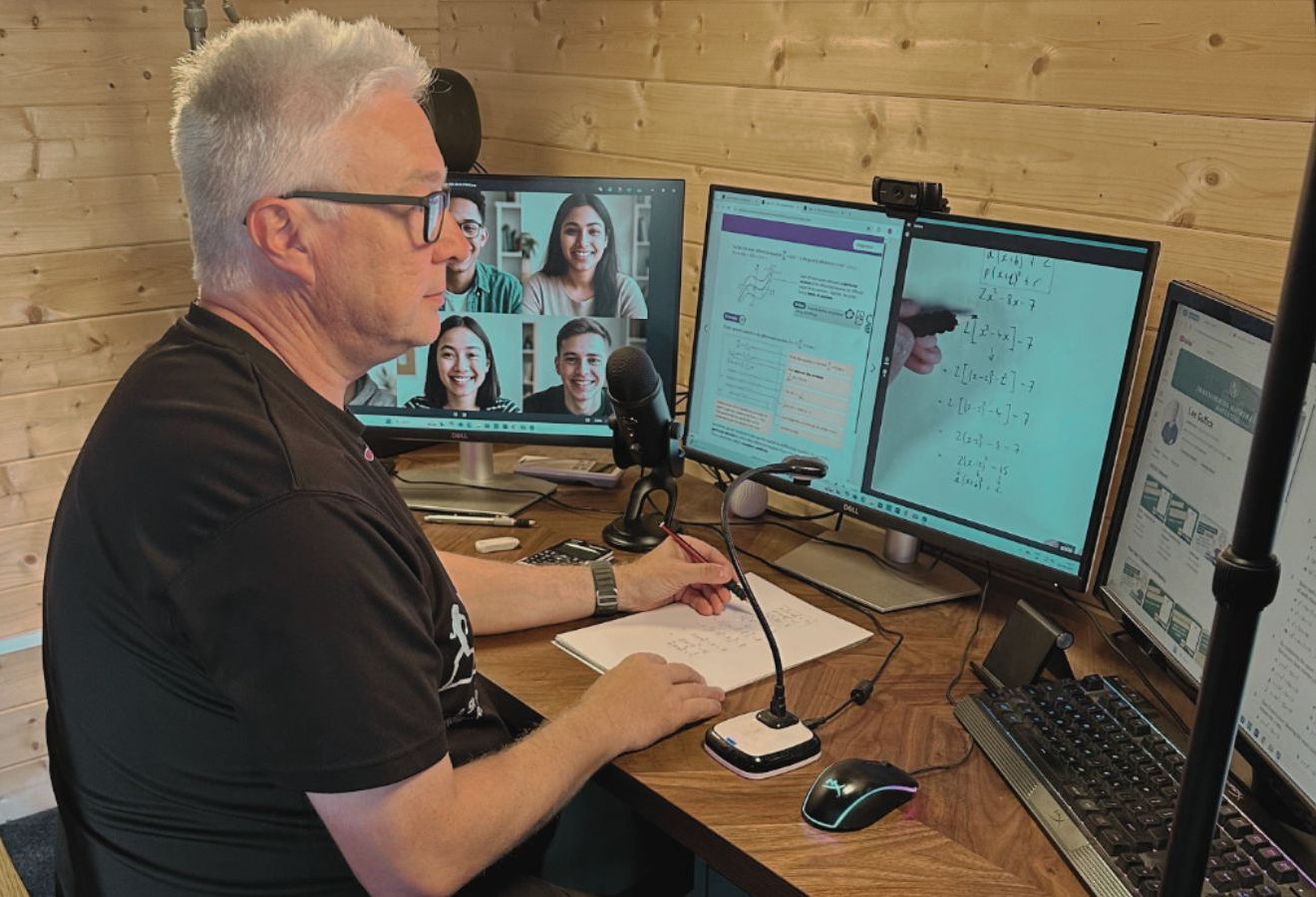

How I work
The longer I taught, the clearer one observation became: the difference between a student who gets an A and one who gets an A* almost never lives in whether they understand the mathematics. It lives in how precisely they read the question, structure the response, and communicate the reasoning. That observation now shapes every session I run.
Marking work as an active Edexcel A-Level examiner alongside teaching has only sharpened the point. Examination papers reward clarity, mark-scheme literacy, and the discipline of writing maths in the language the exam expects. Most students don't lose those marks because they can't — they lose them because nobody's taught them, deliberately, where the marks actually go.
What I run is a structured small-group programme — capped at ten students per cohort, live online, focused on bridging that gap between mathematical understanding and exam performance. It isn't generic revision. It's deliberate practice in writing maths the way the mark scheme rewards, week by week, until that becomes second nature.
Credentials and recognition
Specific, externally-validated engagements with the bodies that define UK mathematical education. Not aspirational claims, verifiable marks of professional standards.
- MA in Mathematics Education (Distinction), University of Warwick
- Outstanding (OFSTED) and Excellent (ISI) — my classroom teaching has been observed in inspections judged at the highest grade each body awards
- Hays Education Award for Excellence — recognition of classroom teaching, 2011–12
- Active Edexcel A-Level examiner — examination work alongside running this programme
- Member, The Tutors' Association — the UK's professional body for tutoring
Each of these means something specific. Together they signal sustained engagement with mathematical education — not a marketing claim about "elite" tuition.
Talk to Lee
A free 15-minute call. We'll talk through your child's stage, what you're hoping for, and whether the programme suits. There's no commitment; most parents find a short conversation tells them faster than any amount of website-reading whether to take it further.
Book a discovery callWhy this works
Fifteen years into classroom teaching, I'd seen the same pattern enough times to know it wasn't isolated: capable students who understood mathematics well were leaving examinations with grades two or three marks below what their understanding could justify. Not because they didn't know the content. Because no-one had taught them, in a deliberate way, how examination questions work — how they're read, how responses are structured, how mark schemes reward precision.
I built this programme to address that pattern directly. It isn't about teaching more content; it's about teaching with attention to the specific gap that costs students marks. The small-group format — ten students per cohort, live, online, weekly — is what makes the deliberate practice possible: enough individual attention for each student to be seen, enough cohort dynamic for accountability and pace.
The active examining work alongside the teaching keeps the observation specific. Every examination cycle, I read papers from students at the cusp between grade bands. The factors that separate them are remarkably consistent — and remarkably teachable, given the right format and enough time.

What students do in the programme
Each cohort works through five things, week by week, deliberately.
* Read questions deliberately – Most lost marks start with the question being misread. We practise reading exam questions with the same care that the mark scheme assumes.
* Structure responses to mark schemes – Every paper rewards a particular kind of working-out. We learn what that looks like for each topic, and practise writing it.
* Build fluency through deliberate practice – Topic-by-topic, the work is repeated in different contexts until it's automatic under exam conditions.
* Receive feedback on the writing, not just the answer – Two students can both get the right answer; only one writes it the way the mark scheme rewards. We focus on the second.
* Practise under exam timing – Timed-paper work is built into the programme cadence, not bolted on at the end.
What makes this programme different
Six things that distinguish it from generic revision tutoring or larger group classes.

Capped at ten students:
Small enough that every student is seen each session; large enough for genuine cohort dynamic.

Live, online, weekly:
Not pre-recorded. Not on-demand. Real-time teaching with the structure and accountability of a regular weekly commitment.

Mark-scheme literate teaching:
The methodology is built around how exam questions are actually marked, not on covering more content for its own sake.

Active examiner perspective:
Every session is informed by what I see, every examination cycle, in the marking.

Year-long programme structure:
Cohorts run with the academic year. The work compounds across terms; it isn't a quick fix.

Direct accountability to the teacher:
I teach every session myself. There's no team of associates; the work, the standards, and the relationship are all mine.
Two ways to work with me

The Small-Group Programme
A capped small group of ten students, live online, with cohorts for Year 12, Year 13 and GCSE. The strategic core of what I do.

One-to-one tuition
For students whose situation calls for individual attention rather than a group setting. Available on a limited basis.